
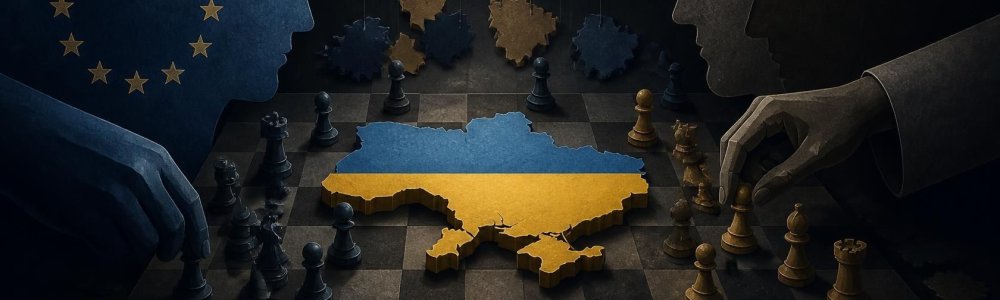
The debate over Europe’s role in the Russia-Ukraine war is becoming increasingly difficult to separate from a broader question: is the objective simply to defend Ukraine, or has weakening Russia itself become part of the strategic objective?
Kaja Kallas, the EU’s foreign policy chief, has made remarks that have fuelled that debate. In a video from the Lennart Meri Conference, Kallas discussed the possibility of a future in which Russia, described as a “big power”, becomes much smaller, while arguing that having more small nations would not necessarily be a bad thing. That footage has since been widely circulated and interpreted by critics as evidence of support for the fragmentation of Russia. The exact political meaning of her remarks remains contested, but the video itself provides the basis for the controversy. (Factually)
This matters because Ukraine is neither a member of the European Union nor NATO. Yet European institutions have increasingly framed the war as central to the continent's security architecture. In a September 2026 address to the European Parliament, Kallas called for continued support for Ukraine, stronger measures against Russia and a more coordinated European response to what she described as Russian hybrid attacks. (European External Action Service)
Critics therefore ask whether Ukraine is being supported solely for Ukraine's own security, or whether the war has also become a vehicle for pursuing a larger geopolitical transformation of Russia.
That question should not be dismissed simply because it is uncomfortable. Nor should every statement by a European politician automatically be treated as evidence of a formal EU policy. But when senior European leaders speak about fundamentally weakening a major neighbouring power, citizens have every right to ask where the limits of Europe's objectives actually lie.