
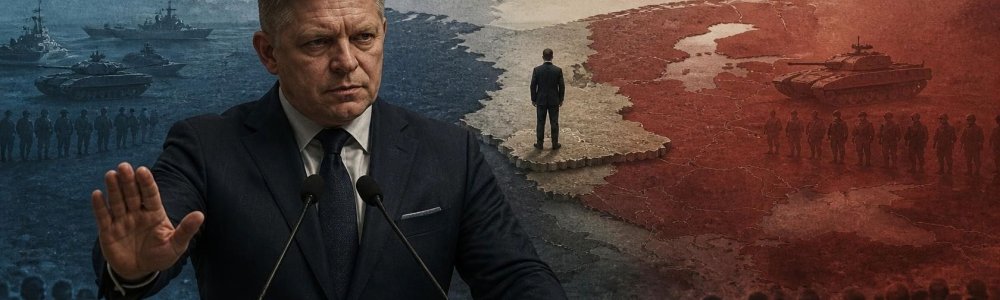
Slovak Prime Minister Robert Fico has delivered an unusually blunt message amid growing tensions between NATO and Russia: Slovakia may be a member of NATO, but he does not want Slovak soldiers drawn into a wider war.
Responding to Czech President Petr Pavel, a former NATO general who criticised Fico's position on collective defence, Fico said he would never be among those seeking a pretext for war between NATO and Russia. He also said that, while he remains prime minister, he will not agree to Slovak troops participating in what he described as a “military adventure” provoked from within NATO. (NewsNow)
Fico's position is particularly significant because it touches the central tension within NATO's collective-defence system. Article 5 establishes the principle that an armed attack against one member is considered an attack against all, but the treaty does not prescribe one identical military response from every ally. Each member determines what action it considers necessary. (TVP World)
Pavel has argued that Fico's position misunderstands the solidarity underpinning NATO, saying that membership carries mutual responsibility. Fico, however, draws a distinction between defending an ally that is genuinely attacked and participating in what he regards as an avoidable escalation between NATO and Russia. (NewsNow)
This is not the same as Slovakia leaving NATO. Fico has repeatedly said that Slovakia values its NATO membership and cooperation within the alliance. The dispute is instead about what that membership should require if Europe moves closer to direct confrontation with Russia. (TVP World)
That distinction deserves serious attention. An alliance built around collective security ultimately depends not only on military capability, but also on agreement about when force should be used. Fico's argument is that NATO solidarity should not become an automatic pathway into every military conflict.
As European leaders increasingly warn about Russian threats and the possibility of wider confrontation, the question Fico is raising is becoming harder to avoid: where exactly should the line be drawn between deterrence, collective defence and entering a war?