
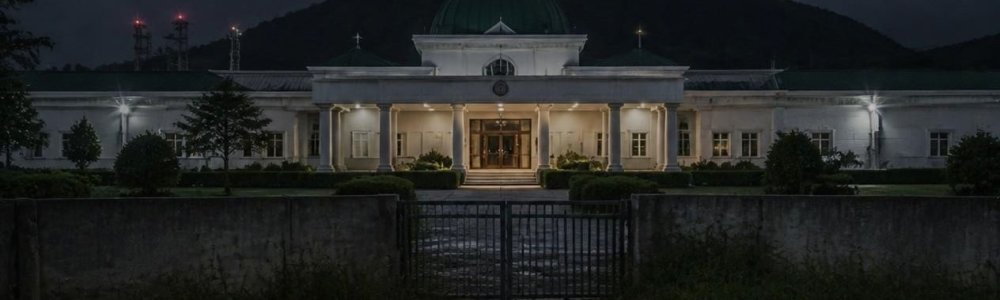
There is something deeply troubling about a government spending roughly N21 billion to complete an official residence for the Vice President, commissioning it with great ceremony, and then leaving the building unused for nearly two years. The residence for Vice President Kashim Shettima was commissioned by President Bola Tinubu in June 2024 after the Federal Capital Territory Administration, under Nyesom Wike, revived and completed a project that had originally been awarded in 2010. Yet, according to recent reporting, Shettima continues to use Akinola Aguda House rather than the residence that was specifically constructed for him.
The fact that the project began under an earlier administration is important, because the N21 billion expenditure cannot simply be described as a project conceived and initiated by Tinubu's government. However, that does not remove the current government's responsibility for what happened after the project was revived, completed and commissioned. In fact, President Tinubu explicitly presented the completion of inherited projects as a way of preventing public money from being wasted on abandoned infrastructure. That makes the continued non-use of the residence particularly difficult to explain, because the government has effectively completed one problem while creating another: an enormously expensive public asset that still does not appear to be serving the purpose for which it was built.
This is where the larger problem of Nigerian governance becomes difficult to ignore. The issue is not simply that one building costs N21 billion, because government expenditure on major infrastructure can sometimes be justified by security, administrative or strategic considerations. The problem is the apparent absence of a clear chain connecting expenditure to outcomes. If security concerns prevented the Vice President from moving into the building, why were those concerns not resolved before the project was commissioned? If additional modifications or security arrangements were required, why was the facility presented as completed? Nearly two years later, the Presidency has still not provided a comprehensive public explanation for the continued non-occupation.
That is precisely why the controversy has become a symbol of something much larger than a residence. Nigeria has enormous infrastructure deficits, a strained healthcare system, unreliable electricity, insecurity, unemployment and widespread economic hardship, yet the state continues to demonstrate a remarkable capacity to spend enormous amounts of money without giving citizens a sufficiently clear explanation of the measurable outcomes expected from that spending. When billions are committed to projects, Nigerians should not have to wait for social media outrage before asking whether those projects are necessary, properly designed, operationally ready and capable of delivering value.
The problem becomes even more serious when public policy appears to operate without a visible hierarchy of priorities. The Tinubu administration has undertaken major economic reforms, including the removal of fuel subsidies and changes to the foreign exchange system, and the government argues that these reforms are intended to place the economy on a more sustainable footing. Whether those reforms have been implemented effectively and how their costs and benefits should be assessed are legitimate matters for public debate. But economic reform cannot be separated from the way government manages public resources. It is difficult to demand sacrifice from citizens while simultaneously allowing expensive government projects to become underused or poorly integrated into the state's actual operations.
This is why the phrase "government by vibes" resonates with so many Nigerians, even though it is obviously a political expression rather than a technical description of public administration. The frustration behind it is the perception that there is plenty of activity, announcements, commissioning ceremonies, political messaging and expensive projects, but not enough evidence of a coherent national strategy connecting these activities. A serious administration should be able to explain what its priorities are, how public expenditure supports those priorities, what outcomes are expected and how citizens can determine whether those outcomes have actually been achieved.
The Vice President's residence is particularly revealing because its history demonstrates the problem from beginning to end. The project was originally awarded for about N7 billion in 2010, was abandoned for years, was eventually revived and had its reported total cost rise to about N21 billion. Wike defended its completion on the basis that abandoning a project after substantial expenditure would itself constitute waste. That argument is understandable, but the completion of an abandoned project cannot be considered the end of the accountability process. The government must also demonstrate that the finished asset is actually useful and that the enormous expenditure has produced the intended public value.
This is ultimately the bigger Nigerian problem: governments frequently measure success by whether something has been constructed, commissioned or announced rather than by whether it works, is used and solves the problem it was intended to solve. That approach encourages a culture in which the ribbon-cutting becomes more important than the outcome, while citizens are left to deal with the consequences of poorly prioritised expenditure.
The Tinubu administration therefore deserves scrutiny not merely over the cost of one Vice Presidential residence, but over whether it has established a sufficiently disciplined system for deciding what Nigeria should spend its limited resources on. Calling the government "diabolically unserious" captures the anger many citizens feel, but the more useful criticism is that Nigeria needs a government whose strategy can be traced from national objectives to budgets, from budgets to projects, and from projects to measurable results. Without that connection, even legitimate projects can become symbols of waste, and billions of naira can disappear into infrastructure that exists physically but fails to deliver the value Nigerians were promised.