
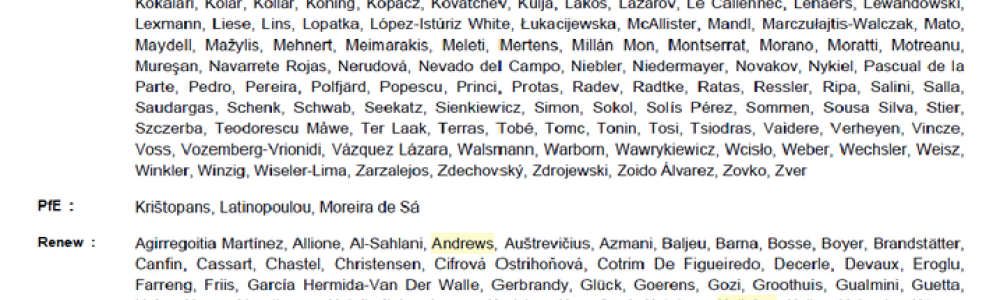
The European Parliament has adopted a resolution on hybrid warfare and the protection of the EU’s territorial integrity and critical security and defence infrastructure. The resolution, led by Lithuanian MEP Rasa Juknevičienė, was debated on 15 September and adopted on 16 September 2026.
Irish MEP Clare Daly has raised a broader democratic question about the language and assumptions behind the resolution. She points to its references to “cognitive warfare”, “reflexive control”, the manipulation of information and the idea that the EU is already operating in a “phase zero” state of warfare. Daly argues that such a framework risks interpreting genuine public dissatisfaction through the lens of hostile foreign influence rather than examining the underlying economic and social conditions producing that dissatisfaction.
Her central concern is not whether hybrid threats exist. It is what happens when the language of national and internal security expands to encompass the information environment, public opinion and citizens’ perceptions. The resolution argues that modern security increasingly depends upon control of cyberspace and the strategic use of digital resources and information systems. It also calls for greater attention to internal security within the broader defence response.
That raises questions that extend beyond the immediate issue of Russia or any other external adversary. Who determines when legitimate political discontent becomes the product of “cognitive warfare”? What safeguards should exist when governments and institutions seek to counter perceived manipulation of information? And how far should defence and security institutions extend into spaces traditionally associated with civilian governance, policing, media and democratic debate?
The European Parliament’s vote gives these questions political weight. For Daly, the issue is ultimately one of democratic accountability: whether citizens experiencing declining living standards and dissatisfaction with their institutions should first be understood as political actors with legitimate grievances, or increasingly as potential targets of hostile influence.
The challenge for European democracies is therefore not simply how to defend themselves against hybrid threats, but how to do so without weakening the democratic freedoms and political pluralism that they are supposed to protect.